
 Available in US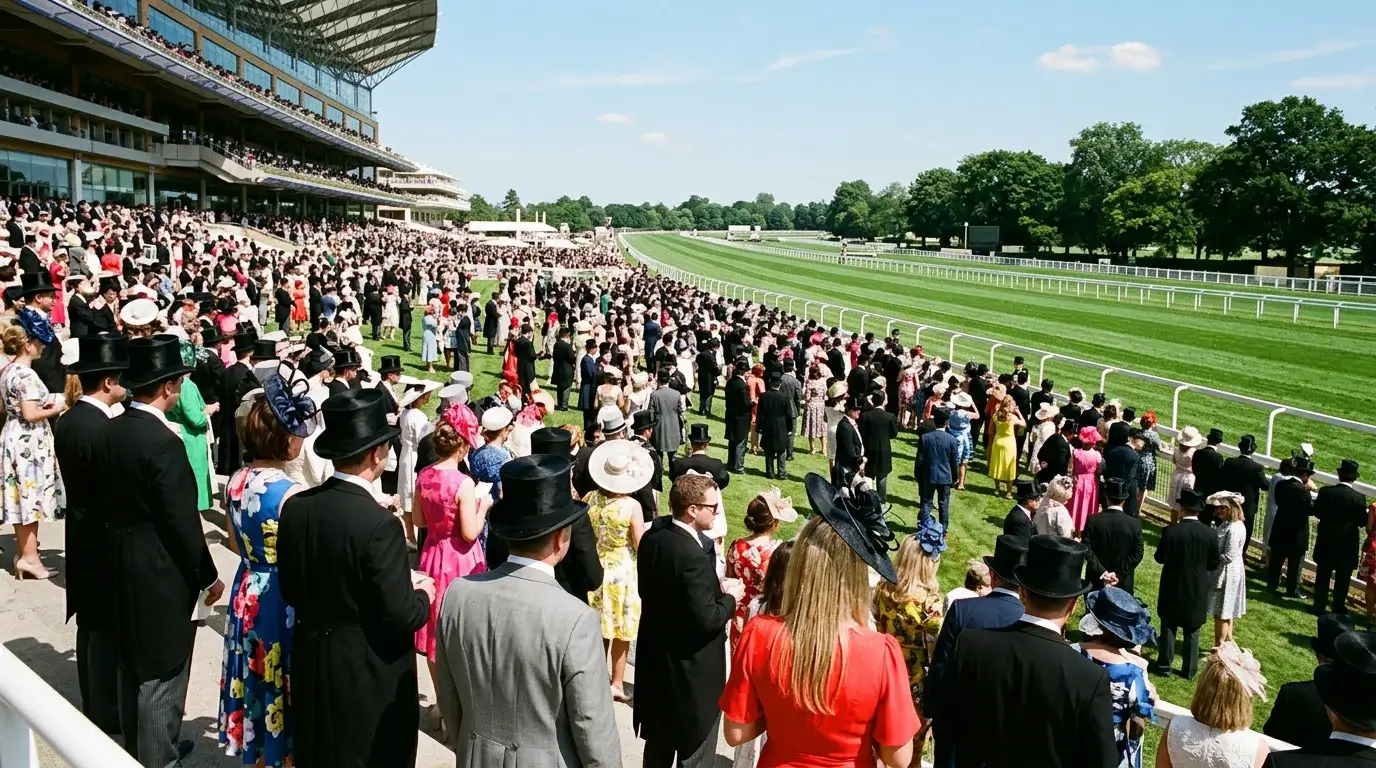
Royal Ascot is British Flat racing at its most concentrated and most conspicuous. Five days in June, thirty Group races, and a meeting that operates simultaneously as a major sporting event, a social occasion, and a showcase for the best middle-distance and sprinting talent in Europe. Where tradition meets record-breaking prize funds, Royal Ascot occupies a position in the racing calendar that no other Flat meeting can match. Royal Ascot Results — More on this topic at horseracing results.
The 2025 meeting drew approximately 285,000 spectators across five days — an average of over 57,000 per day, a figure that puts it among the best-attended sporting events in Britain during the summer. Those spectators witnessed a programme of racing that has grown steadily richer, more international, and more competitive with each passing year. The results from Royal Ascot set the tone for the rest of the Flat season and produce form that is referenced in every major race from July to October.
Understanding what Ascot’s numbers mean — the record prize funds, the attendance patterns, the Group 1 results — is essential for anyone who wants to read Flat racing form with any depth. This guide walks through the meeting’s financial milestones, its championship-level form, and the races beyond Royal Week that extend Ascot’s influence across the entire season.
From £10.65 Million to the UK’s First £2 Million Race
Ascot’s prize money trajectory has been extraordinary. The Royal Meeting’s total purse for 2026 is set at £10.65 million, a record for the five-day meeting and part of a broader Ascot seasonal total of £19.4 million. These numbers represent sustained, deliberate investment by the racecourse in attracting the best horses from Britain, Ireland, France, Japan, Australia, and beyond.
The headline within the headline is the King George VI and Queen Elizabeth Stakes, which in 2026 becomes the first race in British history to offer a prize fund of £2 million. The King George, run at Ascot in late July over a mile and a half, brings together the best middle-distance horses from both the Classic generation and the older division — a midsummer championship that now carries financial weight commensurate with its prestige.
This escalation in prize money is not accidental. Felicity Barnard, CEO of Ascot Racecourse, has framed the increases as a direct attempt to encourage continued investment in British racing — investment in breeding, in training, and in keeping top-class horses racing in Britain rather than retiring early to stud or being sold overseas. The economics are simple: higher prize money means better returns for owners, which means more willingness to keep horses in training, which means stronger fields, which means better results, which means more public interest. The cycle is self-reinforcing, and Ascot is placing itself at its centre.
The broader funding landscape supports this ambition. The Horserace Betting Levy Board allocated £77.1 million in prize money funding for 2026, an increase from £72.7 million the previous year. While this levy funding is distributed across all British racing, the uplift signals an industry that is investing in quality — a commitment that is most visible at the sport’s flagship meetings.
Royal Ascot Group 1 Results: Patterns and Standout Performances
Royal Ascot stages eight Group 1 races across the five days — more than any other meeting in Britain. They cover every Flat discipline: sprinting (King’s Stand, Diamond Jubilee, Commonwealth Cup), miling (Queen Anne, St James’s Palace, Coronation), middle-distance (Prince of Wales’s), and staying (Gold Cup). The breadth of the programme means the meeting produces championship-level form at every distance, making it the most complete test of Flat racing quality in the calendar.
The results from Royal Ascot Group 1 races set the form standard for the rest of the season. A horse that wins the Prince of Wales’s Stakes is immediately rated among the best middle-distance performers in Europe; a Gold Cup winner is confirmed as the champion stayer. These results feed directly into the end-of-season rankings and World Thoroughbred Rankings, and they influence breeding decisions worth millions of pounds — a stallion’s stud fee can double on the back of a Royal Ascot Group 1 victory.
Patterns in the results reward careful study. The Queen Anne Stakes, the meeting’s opener on Tuesday, has a strong record as a pointer to the rest of the week — the pace and conditions set on day one often tell you what to expect for the remaining four days. The Gold Cup, over two and a half miles, consistently produces a small number of repeat winners, reflecting the rarity of genuine high-class stayers and the difficulty of the test. The sprints, by contrast, are often won by horses at the peak of a short-lived ability curve, with turnover in the results from year to year.
International runners have become an increasingly significant feature. Japanese-trained horses have made sporadic but eye-catching raids, while French and Irish runners are a permanent and often successful presence. The results reflect a meeting that is truly global in ambition, with the prize money serving as the magnet that draws entries from across the world.
For punters, Royal Ascot Group 1 results also carry a practical warning: the form is strong, but the races are fiercely competitive, and favourites are beaten regularly. The meeting’s big-field handicaps — the Royal Hunt Cup, the Wokingham, the Britannia — are notoriously difficult to solve, with large fields, significant draw biases, and a level of competitiveness that makes finding the winner a genuine challenge. These races produce results that are as much about pace scenarios and track positioning as they are about raw ability, and they reward analytical approaches that go beyond simple form reading.
Beyond Royal Week: King George and Champions Day
Ascot’s influence on British Flat racing extends well beyond the five days in June. The King George in July and Champions Day in October bookend the summer season with two of the highest-quality meetings on the calendar, and both produce results that shape the year-end narrative.
The King George, now worth £2 million, is the midsummer showpiece: a race that brings together Derby winners, Arc contenders, and older horses in a single, definitive contest. Its results carry enormous weight in the form book because the race reliably attracts the best available field and is run under fair conditions on a well-maintained track.
Champions Day in October — British racing’s richest single card — stages the Champion Stakes, the Sprint, the Long Distance Cup, and the Fillies & Mares event, all at Group 1 or Group 2 level. It is the season’s valedictory meeting, and its results determine the final rankings and championship titles for the Flat campaign. See also Epsom Derby Results.
Nick Smith, Ascot’s Director of Racing and Public Affairs, has described prize money as the most important investment tool for attracting horses to run from home and abroad. The logic applies across all three of Ascot’s major meetings: the higher the prize money, the better the fields, the stronger the form, and the greater the value of the results as a guide to future performance. Ascot has committed to leading this investment, and the results — measured in both sporting quality and commercial success — suggest the strategy is working.
