 Available in US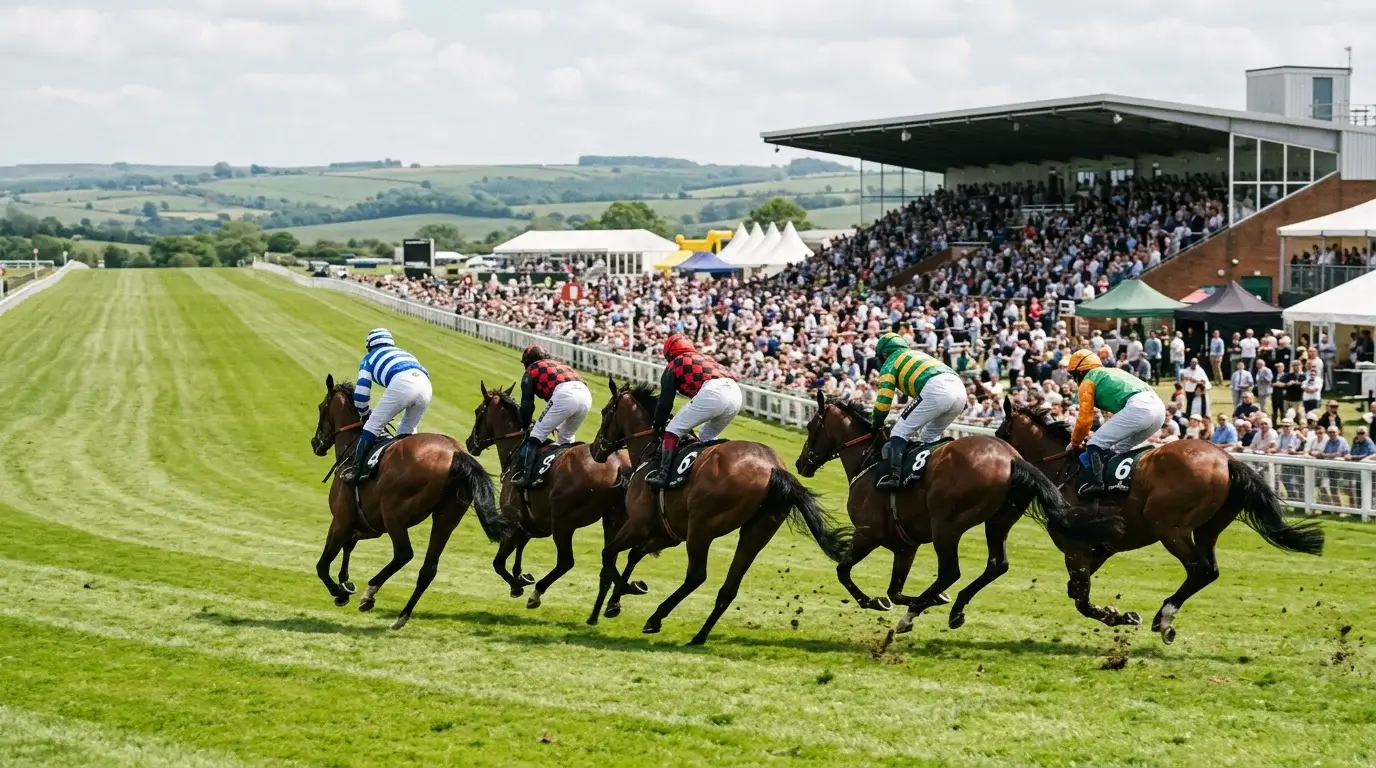
The Derby is the race that made the thoroughbred. First run in 1780, it is the most prestigious Classic in British Flat racing — the ultimate test of the three-year-old thoroughbred, a race that has shaped breeding decisions, defined careers, and generated results that are studied centuries after the horses crossed the line. Every major racing nation in the world has named its own premier race after it: the Kentucky Derby, the Irish Derby, the French Derby. There is only one original. Epsom Derby Results — More on this topic at horseracing results.
Run at Epsom Downs in early June over a mile and a half, the Derby occupies a unique position in the racing calendar. It is the race that every owner of a well-bred colt dreams of winning, the race that determines which stallion will command the highest stud fees, and the race whose results carry more weight in the bloodstock market than any other single contest. Understanding why the Derby matters, how Epsom’s extraordinary topography influences the results, and what patterns emerge from the modern era is essential for anyone who takes Flat racing form seriously.
Why the Derby Remains the Supreme Flat Test
The Derby’s supremacy rests on what it asks of a horse. At a mile and a half, it demands genuine stamina — this is not a race for speed merchants who cannot stay. At Epsom, it demands balance and agility on the severe camber and gradient changes that make the course unlike any other in British racing. And at three years old, in early June, it demands precocity: the ability to produce a career-best performance before a horse is fully mature.
This combination of demands means the Derby winner is, by definition, a horse of exceptional quality. It has proven it can stay, handle testing conditions, and beat the best of its generation while still developing. The breeding industry takes note: a Derby winner’s commercial value as a stallion increases exponentially, because the race is widely regarded as the truest test of whether a horse has the complete package of speed, stamina, and temperament.
The financial context underlines the stakes. British racing distributed £153 million in prize money across the first three quarters of 2025, and the Derby’s own purse — typically among the richest for three-year-olds — reflects the race’s status. But the real money is in the breeding rights that a Derby victory unlocks. A colt that wins the Derby can retire to stud for a fee that generates revenue dwarfing any prize fund, making the race the single most important commercial event in the Flat thoroughbred’s career.
The Derby’s significance also extends to the development of the racing programme. Many of the season’s most important subsequent races — the Eclipse, the King George, the Arc de Triomphe — are contested by Derby runners who return to those events with the prestige and the form earned at Epsom. Derby results, therefore, are not just historical records: they are predictive data for the rest of the Flat season.
The Epsom Camber: How the Course Shapes Results
Epsom Downs is not a normal racecourse, and pretending otherwise when reading the results is a recipe for misjudging form.
The Derby course rises steeply from the start for the first half mile, then climbs more gradually to the highest point at the top of Tattenham Hill. From there, the course drops sharply downhill on a severe left-handed camber through Tattenham Corner and into the home straight. The camber is the defining feature: horses running on it are tilted to the left, and any that cannot handle the slope — or are unbalanced by the gradient change from downhill to level — lose ground they cannot recover.
The results bear this out consistently. Derby winners tend to be horses with excellent balance, the ability to quicken on a downhill slope, and the stamina to sustain that effort through the final three and a half furlongs of the straight, which is flat but comes after the exertion of the descent. Horses that act on the camber have a decisive advantage; those that do not are exposed regardless of their raw ability.
This course effect means that Derby form does not always translate directly to other venues. A horse that wins the Derby by virtue of handling Epsom’s unique demands may not reproduce that form at York or Goodwood, where the challenges are entirely different. Conversely, a horse that runs below expectations at Epsom — struggling with the camber, losing its position on the descent — may be significantly better than its Derby result suggests and can be followed with confidence at fairer tracks.
The breeding implications are intertwined with the course effect. The thoroughbred foal crop in Britain has declined to 4,015 in 2025 — a twenty-year low, and the breeding decisions that produced those foals were influenced, in part, by which stallions have proven their progeny can handle Epsom. Sires whose offspring win at the Derby are more commercially attractive, which funnels investment towards particular bloodlines and shapes the genetic makeup of future generations. The course does not just test the horse — it moulds the breed.
Recent Derby Winners and Emerging Patterns
The last decade of Derby results reveals several patterns that form students can exploit — or at least use to narrow down a notoriously difficult race to solve.
Trial form has become an increasingly reliable guide. The traditional Derby trials — the Dante Stakes at York, the Lingfield Derby Trial, the Chester Vase — consistently produce runners who go well at Epsom. Horses that have run over at least a mile and a quarter before the Derby and shown the ability to handle a turning track have a statistical advantage over those stepping up in distance or tackling left-handed bends for the first time.
Trainer concentration is another feature. The Derby has become a race dominated by a small number of elite operations. Aidan O’Brien from Ireland has rewritten the record books with multiple victories, and in Britain the race tends to gravitate towards trainers at the highest level — those with the resources, the breeding access, and the experience to prepare a horse specifically for Epsom’s demands. Smaller yards do win the Derby, but the results show it is increasingly a race for well-resourced operations.
Winning distances in the Derby vary considerably, and they tell their own story. A decisive Derby — won by three or four lengths — typically indicates a genuinely superior horse that has handled Epsom’s challenges so well that the camber and gradient barely affected it. A tight Derby — a neck or a short head — suggests a competitive renewal where course aptitude was the marginal factor. Both types of result appear regularly, and the distance between first and second is often the best indicator of how much the winner can be trusted in subsequent races at different tracks. See also Horse Racing Replays.
The Oaks, the fillies’ equivalent of the Derby run over the same course and distance the day before, provides an additional layer of form data. The two races share the same conditions — going, wind, track state — and the Oaks result can inform how the Derby might unfold. If the Oaks favoured front-runners on the rail, that pattern tends to repeat the following day. If closers dominated, the Derby result often confirms the bias. Reading the two races together is a tool that experienced Epsom analysts use every year, and the results consistently reward it.
