
 Available in US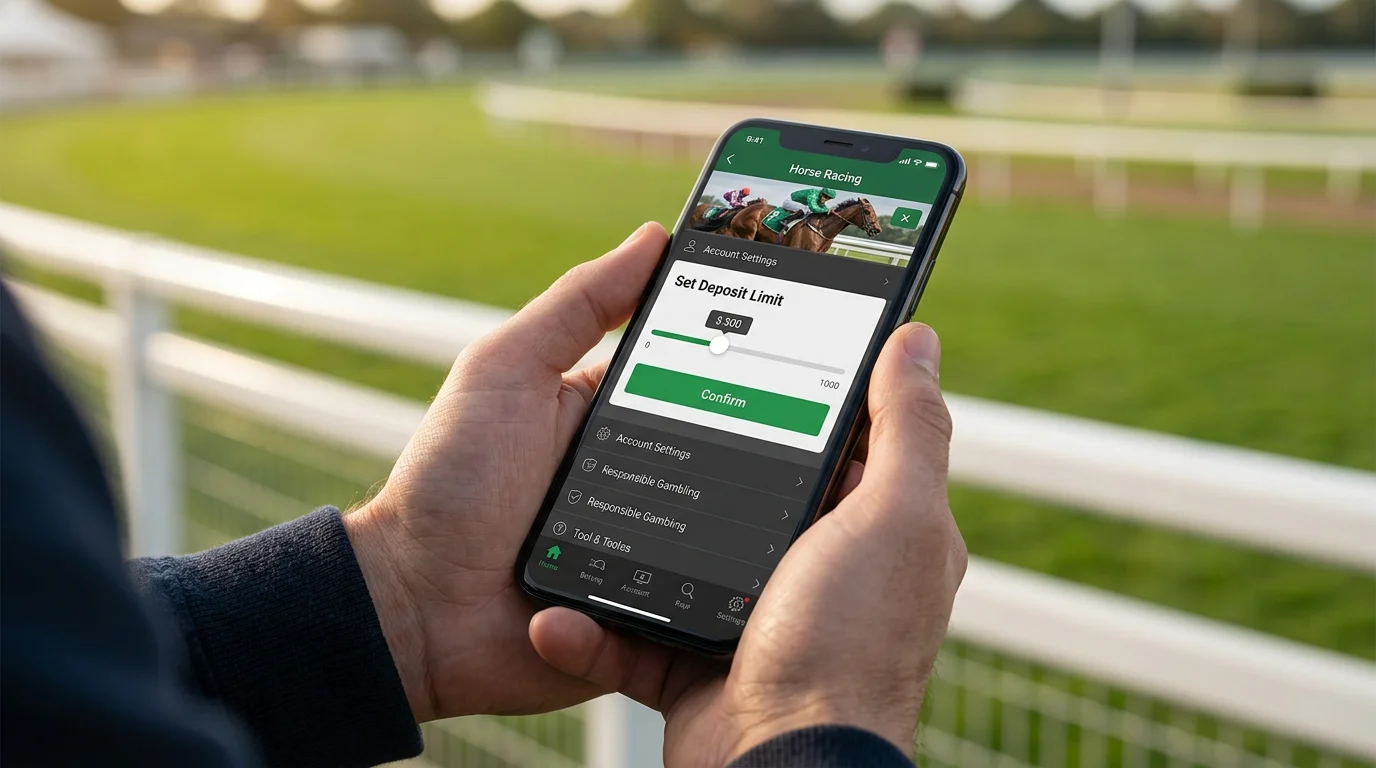
Horse racing and betting are intertwined. The sport’s economics depend on wagering — remote horserace betting alone generated over £766 million in gross gaming yield during 2024-25 — and for many racegoers, a bet is an inseparable part of the experience. That relationship is overwhelmingly positive for the vast majority of punters: a small stake, a bit of excitement, a modest win or a modest loss that makes no difference to their week. Responsible Gambling and Horse Racing — More on this topic at horseracing results.
For a minority, however, the relationship with betting becomes damaging. Enjoying the sport without losing control is a principle that the industry, the regulator, and the support organisations agree on — even if they disagree on the details of implementation. This guide covers the practical tools available to anyone who wants to manage their betting, the warning signs that suggest the balance has tipped, and the organisations that offer help when it has.
Deposit Limits, Reality Checks and Self-Exclusion (GAMSTOP)
Every licensed bookmaker operating in Britain is required by the Gambling Commission to offer a set of responsible gambling tools. These are not optional extras buried in a settings menu — they are regulatory requirements, and the operators face sanctions if they fail to provide them.
Deposit limits allow you to set a maximum amount you can deposit into your betting account within a given period — daily, weekly, or monthly. Once the limit is reached, you cannot deposit more until the period resets. This is the simplest and most effective budgeting tool available. Setting a weekly deposit limit that matches your discretionary gambling budget removes the temptation to chase losses by adding more funds in the heat of the moment.
Reality checks are notifications that pop up after a set period of continuous play — typically every 30 or 60 minutes — reminding you how long you have been active and how much you have wagered. They interrupt the flow of betting, which is precisely the point: the interruption creates a moment to step back and assess whether you want to continue. Most operators allow you to customise the frequency of these alerts.
Time-outs and cooling-off periods allow you to temporarily suspend your account for a period of your choosing — 24 hours, seven days, 30 days, or longer. During the time-out, you cannot log in, deposit, or place bets. This is useful when you recognise that a bad run is affecting your judgement and you need to step away.
GAMSTOP is the national self-exclusion scheme for online gambling. By registering with GAMSTOP, you block yourself from all licensed online gambling operators in Britain for a period of six months, one year, or five years. The registration is straightforward and takes effect quickly. GAMSTOP is a powerful tool for anyone who feels that individual operator limits are not sufficient and that a comprehensive block is needed.
Entain’s data from the Grand National showed that 82% of cash bets on the race were for £5 or less. The overwhelming majority of racing bets are small, social, and well within the bettor’s means. The tools described above are designed for those whose betting has begun to exceed those boundaries — and using them is a sign of awareness, not weakness.
Recognising Problem Gambling: Warning Signs
Problem gambling does not announce itself with a single dramatic event. It typically develops gradually, and the warning signs are easier to identify in retrospect than in the moment. Being aware of these signs — in yourself or in someone you know — is the first step towards addressing the issue.
Betting more than you can afford to lose is the most fundamental warning sign. If the money you are wagering would otherwise be needed for rent, bills, food, or other essentials, the balance has already shifted. Chasing losses — placing larger bets to try to recover money already lost — is another classic indicator. The logic of chasing losses feels compelling in the moment, but the mathematics are merciless: increasing your stakes after a losing run increases your risk of larger losses, not your chance of recovery.
Spending increasing amounts of time on betting-related activities — researching, placing bets, checking results, watching replays — at the expense of work, relationships, or other interests is a behavioural sign that the activity has become disproportionate. Lying to family or friends about the amount of time or money spent on gambling, or feeling irritable or anxious when unable to bet, are emotional indicators that the relationship has become unhealthy.
Borrowing money to fund betting — from friends, family, credit cards, or loans — is a serious escalation. At this point, the financial risk extends beyond the individual and begins to affect others. If you recognise this pattern in your own behaviour, or in someone close to you, it is important to seek support rather than attempt to resolve the situation through further betting.
It is worth noting that problem gambling can affect anyone, regardless of income, education, or experience with the sport. There is no profile of a “typical” problem gambler — it can develop in a first-time punter placing their first Grand National bet just as it can in a seasoned form student who has been betting for decades. The common thread is not the type of person but the type of pattern: escalating stakes, diminishing control, and increasing negative consequences.
Where to Get Help: BeGambleAware, GamCare, National Helpline
Multiple organisations in Britain offer free, confidential support for anyone affected by problem gambling — whether personally or through someone they know.
BeGambleAware (begambleaware.org) is the primary national resource. It provides information, advice, and access to treatment services, including counselling and cognitive behavioural therapy. The website includes self-assessment tools that help you evaluate your relationship with gambling and determine whether you might benefit from support.
GamCare (gamcare.org.uk) operates the National Gambling Helpline, available on 0808 8020 133, which offers free, confidential advice 24 hours a day, seven days a week. GamCare also provides online chat support, counselling services, and a network of treatment centres across Britain. For anyone who finds it easier to speak than to search a website, the helpline is the most direct route to support.
Gordon Moody provides residential treatment for those with severe gambling addiction, offering intensive programmes that address the underlying causes of problem gambling rather than just the symptoms. See also Stewards’ Enquiry Explained.
The broader industry context adds a layer of responsibility. A spokesperson for the Betting and Gaming Council has noted that BGC members generate £6.8 billion for the economy, contribute over £4 billion in tax, and support 109,000 jobs. That economic contribution comes with an obligation to ensure that the products it profits from do not cause harm. The responsible gambling tools, the helplines, and the treatment services represent the industry’s acknowledgement of that obligation — an acknowledgement that the vast majority of punters will never need to act on, but that must be available for those who do.
