
 Available in US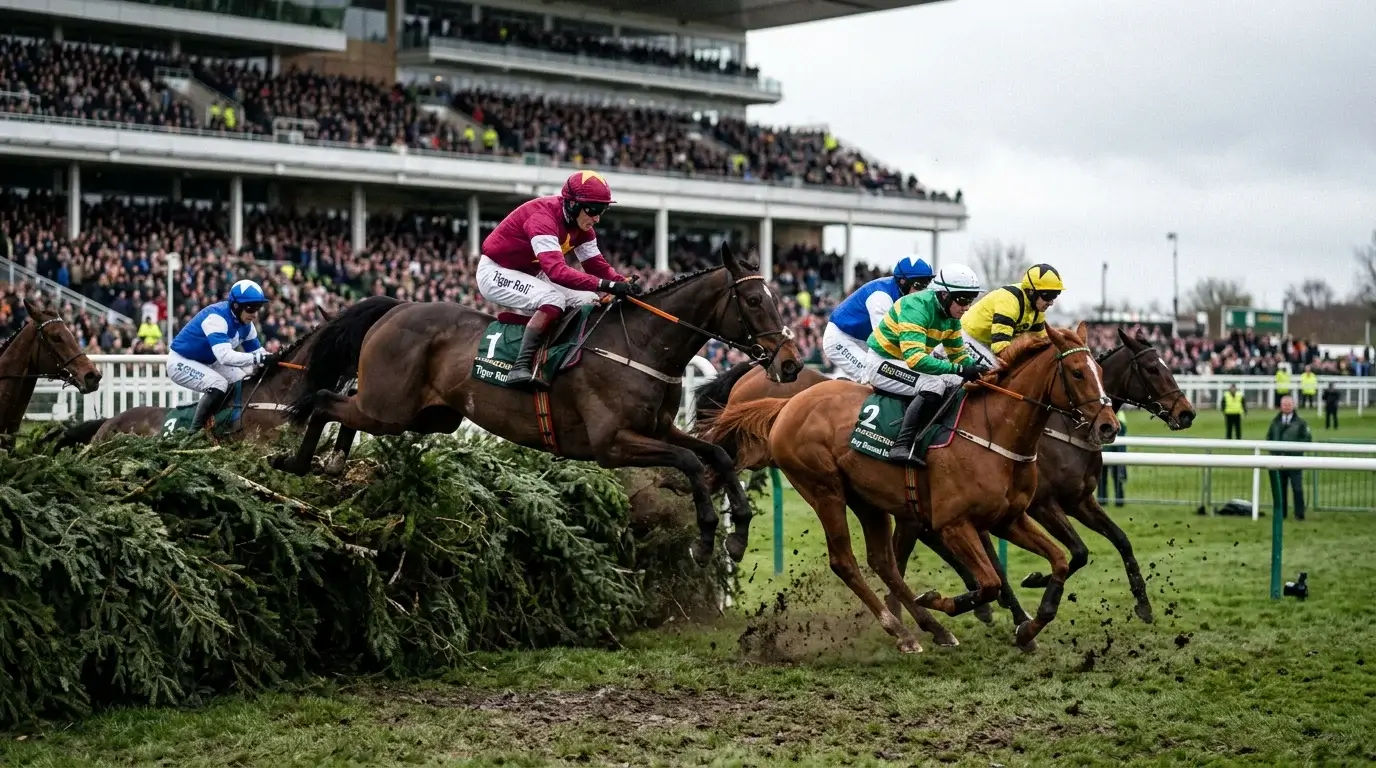
No horse race on earth commands the audience of the Grand National. Run at Aintree every April over four miles and two and a half furlongs, it is the most famous race in the world — an event that transcends the sport and reaches deep into the national consciousness. People who never bet on another race all year will have a flutter on the National. People who cannot name a single racecourse will sit down to watch it. The numbers bear this out: the three-day Aintree festival draws approximately 150,000 spectators, and the global television audience for the race itself reaches an estimated 800 million viewers across 170 countries. Grand National Results — More on this topic at horseracing results.
Those figures make the Grand National a cultural event as much as a sporting one. But behind the spectacle sits a set of results — a winners list spanning nearly two centuries — that tells its own story about the evolution of steeplechasing, the economics of the racing industry, and the changing relationship between the sport and the public that funds it through the turnstiles and the betting windows.
First run in 1839, the race has survived world wars, course relocations, and repeated controversy over safety. Its evolution from a reckless test of horse and rider over hedgerows and ditches to a heavily regulated, televised spectacle says as much about changing attitudes to animal welfare and risk as it does about racing itself. The results from each era serve as a record of that evolution.
£60 Million for Liverpool: The Grand National’s Economic Footprint
The Grand National is not just a race — it is an economic engine. The BHA estimates that the event generates £60 million annually for the Liverpool City Region, supporting hundreds of jobs in hospitality, retail, transport, and tourism. For a city that already has a strong events economy, the three-day Aintree meeting is one of the headline fixtures, drawing visitors from across Britain and overseas.
The economic impact extends well beyond the racecourse gates. Hotels in Liverpool and the surrounding area are fully booked for the festival weekend, with rates reflecting the premium. Restaurants, bars, and shops benefit from a wave of spending that peaks on Grand National Saturday but spreads across the entire week. The transport infrastructure — trains, coaches, taxis — operates at capacity, and the knock-on effects reach local suppliers and service providers who may never set foot on the course.
From a betting perspective, the Grand National exists in a category of its own. Data from Entain showed that the 2024 Grand National attracted 700% more bets than the Cheltenham Gold Cup — the second-biggest jump race of the season. No other individual race comes close. The National’s unique ability to draw casual punters, many of whom bet once a year, creates a betting spike that distorts the normal patterns of the market and generates a disproportionate share of annual racing revenue in a single afternoon.
This economic heft gives the Grand National political weight too. It is the race that politicians reference when discussing the value of the racing industry, the race that sponsors attach their name to for maximum exposure, and the race whose results make the front pages of newspapers that would not normally cover horseracing.
£1 Million Prize and the £5 Bet: Grand National by the Numbers
The Grand National’s prize fund stands at £1 million, with the winning owner receiving £500,000 — figures that make it one of the most valuable jump races in Britain, though not the most lucrative in absolute terms. The prize money is funded through a combination of sponsorship, media rights, and contributions from the Horserace Betting Levy Board, reflecting the race’s unique commercial position.
But the truly distinctive financial characteristic of the Grand National is not the prize for the connections — it is the size and nature of the bets placed by the public. Entain’s analysis found that 82% of cash bets on the Grand National were for £5 or less. This is the defining statistic of the race’s relationship with casual punters: the Grand National is the one occasion when millions of people stake a small amount on a horse chosen by name, by the colour of its silks, or by a tip from a colleague at work. These are not serious form bets. They are social bets — a way of participating in a shared national event.
For regular punters, the Grand National results provide a different set of data. The race is a handicap over extreme distance with 40 runners and 30 fences, and the form book throws up patterns that reward close study. Horses carrying less than 10 stone 7 pounds have historically outperformed those at the top of the weights. Horses aged between nine and eleven have the best record. Previous experience of the Aintree fences — either in the Grand National itself or in earlier races at the course — is one of the strongest positive indicators. These patterns, drawn from decades of results, give the serious analyst a framework that the casual punter lacks.
Recent Grand National Winners and Key Trends
Recent Grand National results reveal a race that has become safer, more competitive, and more international in its reach — while retaining the unpredictability that defines its appeal.
The modifications to Aintree’s fences, phased in over the past fifteen years, have reduced the number of fallers without eliminating the challenge. The fences are still unique in British racing — bigger, stiffer, and more imposing than anything encountered at Cheltenham or Kempton — but the reshaped cores and modified profiles have made them more forgiving on horses that make mistakes. This is visible in the results: completion rates have improved, and the days of only a handful of finishers are increasingly rare.
Irish-trained runners have dominated the recent results. The strength of Irish jump racing, driven by deep talent pools and trainers like Willie Mullins and Gordon Elliott, has tilted the Grand National’s competitive balance. British trainers still compete strongly — and the handicap nature of the race ensures that class alone does not guarantee success — but the Irish raiding parties arrive at Aintree with horses specifically prepared for the unique demands of the course.
The trend towards more experienced horses winning is also notable. The last decade of results shows a clear bias towards horses that have run over the Grand National fences before. First-time National runners, particularly those from Flat or hurdle backgrounds, face a steep learning curve: the fences demand a technique and a courage that cannot be simulated on any training ground. Results consistently show that course experience is one of the most reliable predictive factors, and punters who filter for it find their shortlists significantly more manageable than the full forty-runner field. See also Royal Ascot Results.
The Grand National will never be a race for the faint-hearted — not for the horses, not for the jockeys, and not for the punters. But its results, accumulated over nearly two centuries, offer patterns to those willing to look for them. The most famous race in the world rewards the same analytical approach as any other — it just does it with more fences, more runners, and considerably more noise.
