
 Available in US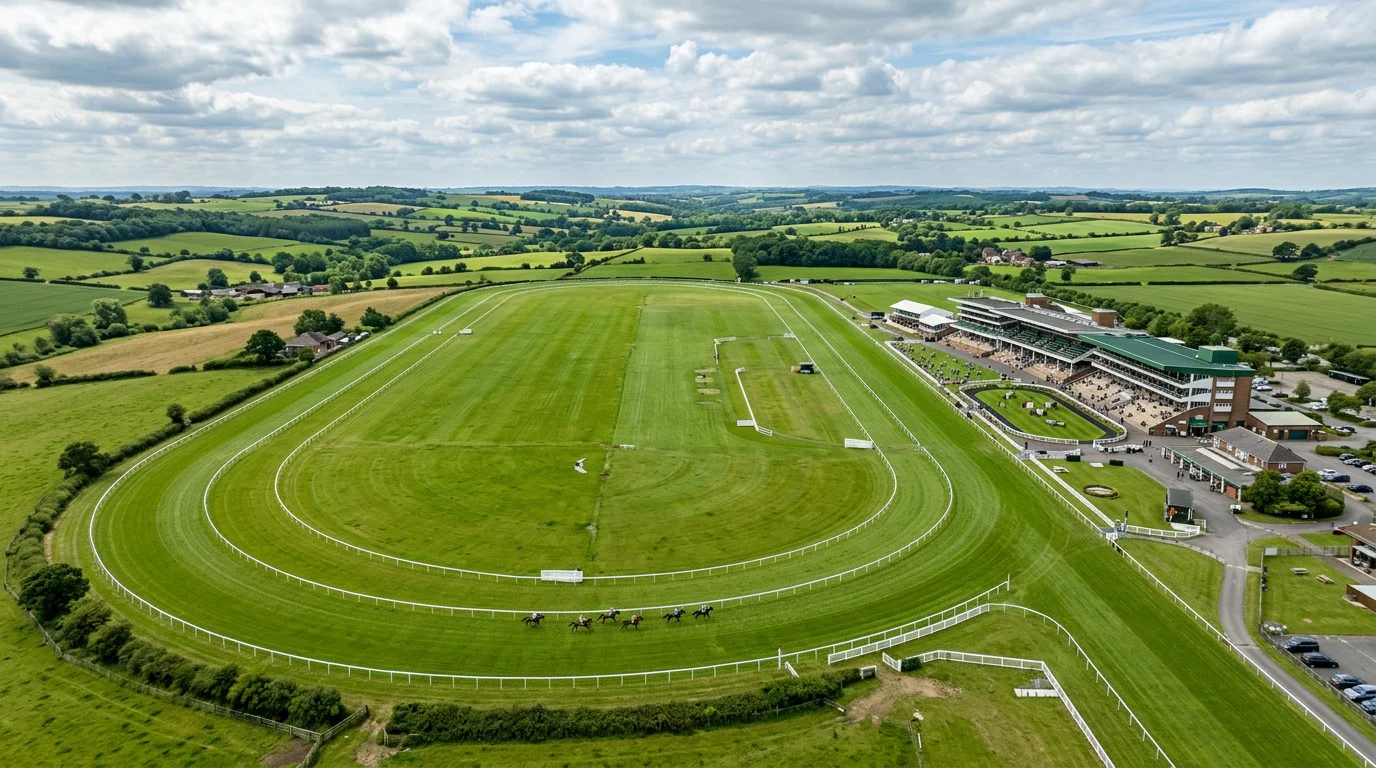
Britain’s 59 licensed racecourses are scattered from Newton Abbot in Devon to Perth in Scotland, each one with its own character, configuration, and quirks. No two tracks are alike. Some are flat and fast, built for speed merchants on summer turf. Others are undulating, stamina-sapping tests that demand a different kind of athlete entirely. The track a horse races on is not a neutral container — it is a variable that shapes the result as much as the going, the distance, or the quality of opposition. UK Racecourse Directory — More on this topic at horseracing results.
For anyone studying results by course, knowing the basic characteristics of each venue is essential. A horse that wins easily at Chester — a tight, left-handed track barely a mile in circumference — may struggle at Newmarket, where the wide-open Rowley Mile demands a completely different running style. An industry supporting approximately 85,000 jobs across those 59 venues depends on this diversity: each track serves its local community, attracts different demographics, and produces results with their own distinctive patterns.
This guide provides a quick-reference overview of British racecourses, grouped by code: Flat-only venues, National Hunt-only tracks, and the dual-purpose courses that host both. Every track, every surface, every quirk.
Flat Courses: Turf and All-Weather Venues
The Flat racecourses of Britain range from the historic to the purpose-built, and their variety ensures that no single type of horse dominates the code.
Newmarket is the headquarters of British Flat racing. It has two courses — the Rowley Mile (used in spring and autumn) and the July Course (summer). Both are right-handed, wide, and straight or nearly straight over shorter distances, with a stiff uphill finish that tests stamina as much as speed. The galloping nature of the track favours horses that travel strongly and sustain their effort. Newmarket results are often regarded as the strongest form in British Flat racing because the track’s width and fairness minimise interference and bias.
Ascot is a right-handed, galloping track with a testing uphill finish over the final two and a half furlongs. It hosts Royal Ascot in June and Champions Day in October — two of the most valuable meetings on the Flat calendar. The round course features a sweeping home turn that rewards horses who handle bends well, while the straight mile is a pure test of speed with a significant draw bias in large fields.
Epsom is unlike any other Flat course in Britain. The Derby course runs over a mile and a half on a severe left-handed camber, with a dramatic downhill section from Tattenham Corner into the home straight. The unique topography means specialists thrive: horses that cannot handle the camber or the gradient have no chance, regardless of ability. Epsom results require careful interpretation because the course itself is such a strong selective factor.
York is a left-handed, flat, galloping track widely considered one of the fairest in the country. The Knavesmire surface is beautifully maintained, and the long home straight ensures that runners have every chance to produce their best. York hosts the Ebor Festival in August, one of the premier summer Flat meetings.
Chester sits at the opposite end of the spectrum: a tight, left-handed circuit barely a mile round, where the draw is king and horses on the inside rail have a significant advantage. Chester results are notoriously unrepresentative of wider form because the track is so unique — a horse can win at Chester by exploiting the draw and the tight bends without possessing genuine top-class ability.
Among the all-weather venues, Lingfield (Polytrack, left-handed), Kempton (Polytrack, right-handed, triangular), Wolverhampton (Tapeta, left-handed), Chelmsford (Polytrack, left-handed), Southwell (Fibresand, left-handed), Newcastle (Tapeta, left-handed), and Dundalk in Ireland (for context, Polytrack) ensure that racing continues year-round. All-weather tracks host a substantial number of fixtures through the winter months when turf racing is limited, and the surface differences between Polytrack, Tapeta, and Fibresand produce distinct form profiles that do not always translate to turf.
National Hunt Courses: Steeplechase and Hurdle Tracks
National Hunt courses are defined by their obstacles — hurdles and steeplechase fences — and by terrain that is often more demanding than anything encountered on the Flat. Many jump tracks are set in hilly countryside, and the undulations that make them visually dramatic also make them seriously testing for the horses.
Cheltenham is the spiritual home of jump racing. The Old Course and New Course at Prestbury Park are left-handed with a significant uphill finish that has broken many a seemingly well-positioned horse in the closing stages. Cheltenham results, particularly during the Festival in March, are considered the gold standard of National Hunt form. The stiff finish rewards genuine stamina and the ability to handle soft ground, which is common during the Festival.
Aintree hosts the Grand National and is a left-handed track with two distinct courses: the Grand National course, with its iconic fences — Becher’s Brook, The Chair, Valentine’s Brook — and the Mildmay course, used for the supporting races during the three-day Festival. The Grand National fences are unique in British racing, demanding a level of jumping ability and bravery that is tested nowhere else.
Kempton also features prominently in the jump calendar, hosting the King George VI Chase on Boxing Day over its right-handed, flat, sharp track. The flat, tight nature of Kempton’s chase course favours speed and agility over stamina, producing results that often contrast with the form from stiffer, more demanding tracks like Cheltenham. The two courses demand quite different skillsets, which is why a Kempton King George winner does not always confirm the form at the Festival.
Haydock, Sandown, and Newbury are among the other premier jump venues, each with their own characteristics. Sandown’s stiff uphill finish and demanding fences make it a true test, while Newbury’s flat, fair layout tends to produce reliable form. Haydock, in the north-west, stages the Betfair Chase in November and is known for its testing conditions when the winter rain arrives.
At the other end of the scale, smaller jump tracks like Plumpton, Fontwell, and Cartmel host competitive racing without the prestige of the major venues. Their tight circuits and smaller fields produce quicker, less taxing contests — and form from these tracks is generally considered weaker than results at the larger courses.
Dual-Purpose Tracks and Unique Layouts
A significant number of British racecourses are dual-purpose, staging both Flat and National Hunt racing at different times of the year. These venues are the workhorses of the fixture list, filling the calendar across all seasons and offering results in both codes.
Newbury is one of the best examples: a high-quality dual-purpose track that hosts top-class Flat racing in the summer and important jump meetings in the winter, including the Ladbrokes Trophy (formerly the Hennessy Gold Cup) in late November. The track’s fair, galloping layout suits both codes, and results at Newbury are widely respected regardless of the time of year.
Doncaster stages the St Leger — the oldest Classic — on its Flat course, and competitive jump racing through the winter. Its flat, left-handed layout produces fair results in both codes. Wetherby, Uttoxeter, and Wincanton are among the smaller dual-purpose tracks that fill the mid-week fixture list, providing steady racing without the profile of the showcase venues.
Then there are the genuinely unique tracks. Goodwood, set on the Sussex Downs with its dramatic undulations and right-handed turns that give way to a straight downhill section, is a Flat course unlike any other. The Glorious Goodwood meeting in late July is one of the highlights of the summer, but the track’s quirks mean that results there do not always translate to flatter venues. Brighton is another oddity — a left-handed horseshoe with sharp bends and significant elevation changes, where the draw and the ability to handle the slopes matter as much as raw ability. See also Cheltenham Festival Results.
Understanding which category a course falls into — Flat, jump, or dual-purpose — and knowing its basic shape, direction, and reputation for fairness is the starting point for reading any set of course-specific results. A horse’s record at a particular track is often the most reliable guide to its future performance there, precisely because the physical characteristics of British racecourses are so varied that track-specific aptitude counts for more than almost any other factor.
